

Touch players, and touched journalists
Dicky Rutnagur
 |

|
The history of English cricket has been littered with episodes of serious concern over its public appeal, health and viability. But fears have never run as high as they did in the mid-1960s, when I began a stint of covering county cricket that stretched to 40 summers.
Ostensibly, the English game was thriving. In the winter of 1965-66, England, under M. J. K. Smith, had played delightful, positive cricket to draw an Ashes rubber. The outlook should have appeared even brighter, for there was a nucleus of talented players, aged just above or below 25, ready to fill any vacancies that might occur.
But the domestic game was undoubtedly in crisis, with some of the counties badly strapped for cash. The crowds which flocked to county grounds in the immediate post-war summers had almost disappeared. In response, MCC, which still administered English cricket, assembled a high-powered committee under David Clark of Kent to investigate the reasons for the decline and offer suggestions for a revival.
The committee found that the cricket served up in the name of the County Championship was drab, not least because pitches were slow and/or uneven. Recommendations included pruning the Championship fixture list to accommodate more one-day games, and relaxing qualification regulations to let in overseas players more freely. These measures were initially rejected, but the major ones came eventually.
In those days of doubt and worry, county cricket was not left wanting for loyalty and support from Fleet Street. A survey commissioned by the Daily Mail revealed that the fall in attendances notwithstanding, the Championship had a following and commanded a very substantial readership. Both the serious papers and the pops were represented at every match. Most counties had correspondents from their local papers travelling with them, and the two national news agencies - the Press Association and Exchange Telegraph - filed updated scores and reports all day.
County press boxes usually had at least six occupants on any given day, almost every one a true character. I can say without bias that we shall never see their like again. This large cast included amusing eccentrics, grumpy old men, a prankster with great imagination and mastery of accents, chaps with gargantuan thirsts and raging libidos, experts in composing expenses, a few dandies and a Walter Mitty or two. And many of them were outstanding journalists.
There was always lively banter in the box and frequent bursts of laughter until writing time arrived. In contrast, a highly charged and entertaining row would erupt every now and again, sparked off by one or other of the hotheads. Nostalgia may be a factor, but I am not sure that county cricket was so bereft of entertainers in that era. There were some very handsome batsmen around. Mike Denness, Maurice Hallam and Ron Nicholls were always so easy on the eye. Roy Marshall could be relied on to thrill. And there was Colin Milburn, who became a legend before he had played five seasons. As a person, warm and modest, and as a cricketer, dashing and chivalrous, he was a priceless asset to English cricket. When, a few years ago, there was all that fuss about Freddie Flintoff 's girth and his fondness for a pie and a pint, one wondered if there would have been a place in today's cricket for that dearest of fat men.
|
|
|
Since then, the qualification regulations have indeed been liberalised; there is full covering of pitches; three-day cricket has turned to four-day cricket; and the Championship has been split into two divisions. All the changes have borne pluses and minuses, but have proved more rewarding than detrimental. The first intake of overseas players who were instantly registered in 1968 - including such greats as Garry Sobers, Rohan Kanhai and Barry Richards - revitalised the ailing Championship and introduced enough glamour to attract sizeable sponsorships for two new one-day competitions, the Sunday League and the Benson and Hedges Cup.
Now the finest talent is available only fleetingly. And there are other pressing factors for channelling resources into producing better home-grown players. Central contracts have effectively removed the England stars from the mainstream of domestic cricket. And there is a developing trend of the richer counties preying on talent at less affluent clubs. Attribute it to the two-division split.
In the 1970s, cheating - falsely claiming catches in particular - was the exception rather than the rule; it was promotion and relegation that perhaps has done more than anything to erode the spirit in which county cricket is conducted and played.
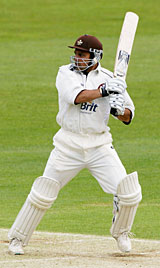
So is county cricket more or less attractive than it was? The influence of one-day cricket and heavier bats have made it more red-blooded and athletic. But the touch player seems to have been lost, which is why watching a Mark Ramprakash innings is such a special treat.
 Top
Top
